


Low back pain is one of the most common issues people face—and it’s no surprise why. Long hours sitting, lifting children, strenuous workouts, or the physical changes of pregnancy and postpartum can all strain the spine.
But did you know your pelvic floor might be a hidden contributor to your low back pain?
In this post, we’ll explain the link between low back pain and pelvic floor dysfunction, why traditional treatments often miss the root cause, and how specialized pelvic health physical therapy can help—especially when sciatic nerve involvement is part of the picture.
The Pelvic Floor–Low Back Pain Connection
Your pelvic floor muscles aren’t just about bladder and bowel control—they are a vital part of your core stability system, working together with the diaphragm, deep abdominals, and spinal stabilizers.
When the pelvic floor is too tight, weak, or not coordinating properly, it disrupts this system, causing extra stress on your lumbar spine. This imbalance can lead to chronic low back pain that persists even after rest, stretching, or traditional therapy.
Signs your pelvic floor might be contributing to your back pain:
-
Low back pain that worsens after sitting for long periods
-
Pain that flares during or after workouts
-
Discomfort during pregnancy or postpartum recovery
-
Pain paired with urinary urgency, leakage, or pelvic heaviness
Sciatic Nerve Involvement: The Missing Link
Here’s something many people—and even some providers—don’t realize: the sciatic nerve, which runs from your low back through your pelvis and down your leg, can develop adhesions or restrictions as it passes near pelvic floor muscles.
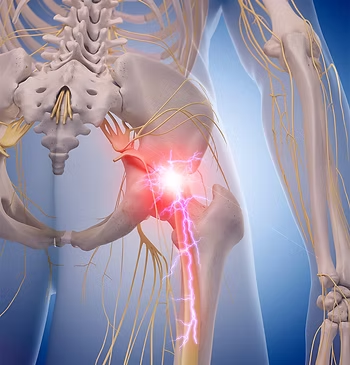
When this nerve is irritated or trapped, it can cause:
-
Radiating low back pain into the buttock or leg
-
Tingling or numbness
-
Deep pelvic or hip discomfort
At Auria Pelvic Health, we use advanced manual therapy techniques to access the sciatic nerve directly and release adhesions around it.
Restoring sciatic nerve mobility often leads to significant pain relief and improved movement—especially when paired with pelvic floor and core retraining.
How Auria Pelvic Health Treats Low Back Pain Differently
Unlike standard approaches that only target the spine or surrounding muscles, our pelvic health specialists take a whole-body approach, including:
-
Pelvic floor muscle assessment (strength, tension, coordination)
-
Hip mobility and stability
-
Core and breathing mechanics
-
Sciatic nerve mobility
Treatment options may include:
-
Internal and external pelvic floor manual therapy
-
Scar tissue and adhesion release
-
Sciatic nerve mobilization
-
Core strengthening and breath retraining
-
Postural strategies for long-term relief
Don’t Live With Low Back Pain—Fix It at the Source
If you’ve been struggling with chronic low back pain, sciatica, or radiating leg pain, it’s time to look beyond the spine. Pelvic floor dysfunction and nerve restrictions are often the missing pieces of the puzzle—and treating them can make all the difference.